
Rubber & steel seals
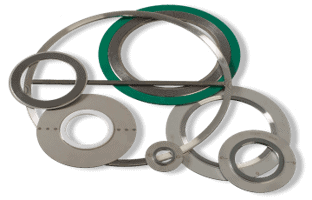
Rubber and rubber-steel seals combine the flexibility of elastomer with the stability of a steel core. This creates an optimal balance between deformability, pressure resistance, and long-term sealing performance. These seals are particularly suitable for drinking water, gas, and industrial applications up to 40 bar, where reliability and standardization are crucial.
NBR
Rubber seals suitable for drinking water, gas, and industrial applications
Rubber seals offer a flexible and reliable sealing solution for diverse applications in water treatment, gas distribution, chemical processes, and general industry. Thanks to the wide choice of elastomers, rubber seals can be precisely matched to the medium, temperature, pressure, and certification requirements. From simple static seals to technically optimized rubber-metal reinforced versions: KLINGER offers a suitable solution for every application.
Where additional mechanical stability or controlled compression is required, rubber-metal reinforced seals such as KLINGER KGS GII offer clear added value.
Solid rubber seals
Solid rubber seals are used when flexibility, easy installation, and high adaptability to flange surfaces are central. Thanks to their elastic nature, they compensate well for slight flange irregularities and ensure a reliable seal at relatively low bolt loads.
Typical applications:
- Drinking water installations
- Gas and methane applications
- Process water
- Wastewater
- HVAC
- Air and ventilation systems
- Light chemical applications
- Food industry
Rubber seals are available as sheet material, die-cut seals, profiles, and fully customized solutions.
Available elastomers
The correct elastomer is selected depending on the medium and operating conditions:
- EPDM: Excellent resistance to water, hot water, ozone, UV, and aging.
- NBR: Good resistance to oils, fats, fuels, and gas.
- FKM: Excellent chemical resistance and high temperature resistance.
- CR (Neoprene): Good mechanical properties and decent weather resistance.
- CSM (Hypalon-type): Highly resistant to UV, ozone, and various chemicals.
- VMQ (Silicone): Excellent flexibility at high and low temperatures.
- IIR (Butyl): Very low gas permeability and good chemical resistance.
In addition, compounds are also available in SBR, cellular rubber, and other specialized elastomers.
Rubber-metal reinforced seals
When flexibility must be combined with structural stability, rubber-metal reinforced seals offer significant added value. By combining an elastomer layer with an integrated steel reinforcement, a seal is created that:
- Is more dimensionally stable
- Compresses in a more controlled manner
- Is more resistant to mechanical stress
- Has less risk of extrusion
- Delivers more consistent sealing performance in the long term
These versions are particularly suitable for connections where reliability, dimensional stability, and low bolt load converge.
KLINGER KGS GII – premium engineered solution
Within this segment, KLINGER KGS GII represents a high-quality rubber-metal reinforced solution. The integrated steel core ensures controlled compression and increased mechanical stability, while the elastomer adapts optimally to the flange surface.
Advantages of KLINGER KGS GII:
- Reliable sealing at low bolt force
- High dimensional stability
- Limited risk of over-compression
- Lower risk of elastomer extrusion
- Long service life
- Easy installation
- Ideal for plastic flanges, PE, and HDPE systems
- Suitable for drinking water, gas, and industrial applications
When to choose a rubber seal?
A flexible rubber seal is particularly suitable when:
- Flexibility is required
- Slight flange irregularities must be compensated for
- Fast installation is important
- Drinking water or gas applications are involved
- Not every rubber seal is equal. Medium, temperature, pressure, standards, and flange construction together determine the right choice.
- Our engineers are happy to assist you in selecting the right solid rubber or rubber-metal reinforced seal, fully tailored to your application.
Are you unsure between different rubber seals? Our engineers will review your application and advise on the right solution. Contact us for an appointment.
Frequently asked questions about rubber-steel seals or rubber sealing tapes
1. What is the difference between a rubber and a rubber-steel seal?
A solid rubber seal consists entirely of elastomer and offers maximum flexibility. This makes it particularly suitable for compensating for slight flange irregularities and providing a reliable seal at relatively low bolt loads.
A rubber-metal reinforced seal combines elastomer with an integrated steel core. This metal reinforcement provides extra mechanical stability, more controlled compression, and a more consistent bolt load distribution. This makes these seals particularly suitable for applications where dimensional stability and structural support are important.
2. For which applications are rubber seals suitable?
Rubber seals are widely used in:
- Drinking water installations
- Gas and methane applications
- Process water
- Wastewater treatment
- HVAC installations
- Air and ventilation systems
- Light chemical applications
- Food industry
The final suitability always depends on the chosen elastomer, the medium, temperature, pressure, and flange construction.
3. For what pressure are rubber seals suitable?
The maximum operating pressure of a rubber seal depends on several factors, including:
- Chosen elastomer
- Material hardness
- Seal thickness
- Any metal reinforcement
- Bolt load
- Type of flange connection
Rubber seals are often used in low to medium pressure applications, but higher pressures are also possible on a project basis when material choice and construction are correctly aligned.
4. When should I choose a rubber-steel seal instead of solid rubber?
A rubber-metal reinforced seal is often the best choice when:
- Low bolt load is available
- Extra mechanical stability is required
- Large diameters must be sealed
- Plastic flanges are used
- Dimensional stability is important
- The risk of extrusion must be limited
In these applications, KLINGER KGS GII offers a particularly reliable solution thanks to the combination of elastic sealing and structural support.
5. Can rubber seals be supplied custom-made?
Yes. In addition to standard dimensions, rubber seals can also be produced custom-made for specific projects, including specific hardnesses or modified versions.
Possibilities include:
- Specific dimensions
- Custom thicknesses
- Different hardnesses (Shore)
- Compound selection based on medium
- Certifications for drinking water, gas, or food
- Rubber-metal reinforced versions
This ensures you always receive a seal that technically matches your installation.
Need advice on rubber or rubber-steel seals?
Are you unsure about the right seal for your application? Our specialists are happy to help you choose the right material and the right version.
Contact us and receive targeted technical advice or a customized quote.