Management and optimization of condensate networks in steam systems. Recover energy. Increase process reliability. Reduce costs.
Our approach
-
Inventory — every steam trap mapped and labeled
-
Process parameters — pressure, temperature, load, operating hours
-
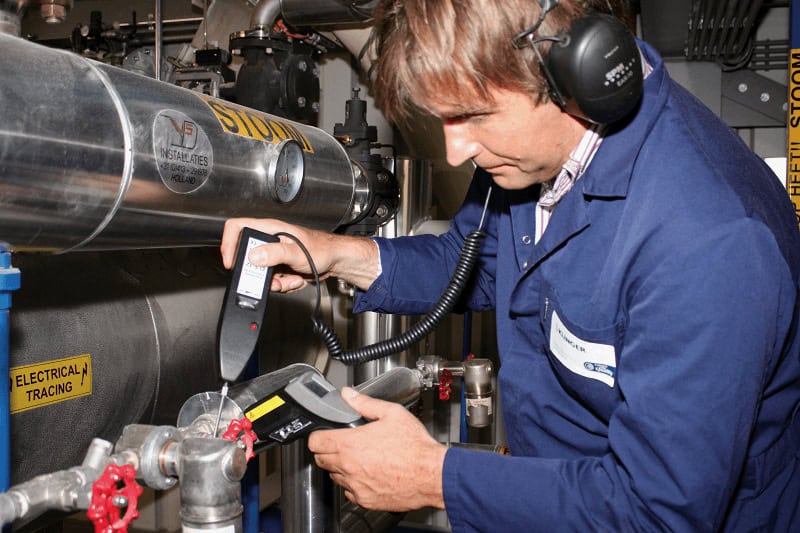
In-service measurement — ultrasonic and temperature, without downtime
-
Analysis — steam loss and cost per defective trap
-
Report — findings, total loss, and priority list
How much does a defective steam trap cost?
As long as a defective steam trap allows steam to escape, you are paying for energy you don’t use. According to the US Department of Energy, 15 to 30% of steam traps can be defective in facilities that haven’t been maintained for 3 to 5 years. With regular inspections, that stays below 5% (source: US DOE, Steam Tip Sheet #1).
Calculate what a steam leak costs you with our Steam Leak Calculator.
Do you recognize these problems?
Water hammer
Excessive condensate remains in the pipes. This can cause severe impacts in the
piping network, resulting in damage.
Energy loss
Hot condensate disappears through the drain, steam leaks from the system. Heat energy is
lost. More steam must be regenerated.
Boiler contamination
Condensate in pipes increases the risk of oxidation. Rust and dirt return to the boiler, resulting in inefficiency.
Drainage blockages
Undersized or incorrectly placed drainage points cause condensate buildup.
Capacity
Incorrect sizing or type of steam trap can lead to capacity issues.
Lack of visibility
You do not know how much condensate there is or where it goes until problems occur.
Why invest in a steam trap audit?
-
Energy savings: hot condensate returns to the boiler instead of being lost.
-
Lower boiler costs: Clean condensate to boiler = less corrosion, sludge, and cleaning. Boiler life is extended.
-
No water hammer: Correct condensate drainage = no impacts in pipes = no damage, no repairs.
-
Greater reliability: you identify defects before they cause problems.
-
Less downtime: Preventive maintenance = preventing malfunctions. No unexpected production stops.
-
Better performance: A clean system works more efficiently. Processes run faster and more reliably.
-
System insight: Monitoring provides data: where is your energy going?
-
Compliance: A well-maintained steam system complies with regulations and insurance requirements.
How often should you have your steam traps checked?
That depends on the pressure. The US Department of Energy recommends:
- Low pressure (below approximately 2 bar): annually
- Medium pressure (approximately 2 to 10 bar): monthly to quarterly
- High pressure (from approximately 10 bar): weekly to monthly
Frequently asked questions
Does production need to be shut down?
No, we measure while your installation is running.
Ready for optimal condensate management?
Ask an expert for advice
Start with a diagnosis of your current system. We help detect energy losses and realize savings.
Book a meeting