
Graphite seals
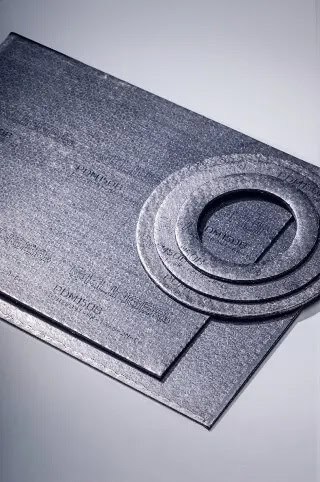
At high temperatures and critical process conditions, a standard seal is not sufficient. Graphite seals from KLINGER combine temperature resistance with low emission values and long-term reliability.
Our graphite seals are considered an industry benchmark for demanding applications. They provide security where process safety and leak-tightness are crucial.
Sigraflex HD
KLINGER Egraflex Steelflon Waveline WLP®
KLINGER XSM
KLINGER TSM
KLINGER SLS B/AS
KLINGER SLN
KLINGER PSM B/AS
KLINGER PDM B/AS
KLINGER MLX
The benchmark in graphite seals
KLINGER graphite seals are produced from expanded pure graphite, a high-quality carbon structure whose crystal structure is significantly expanded via a controlled chemical and thermal process.
The expanded graphite flakes are rolled in multiple stages into a thin, flexible foil. This foil is then laminated into thicker sheets, which serve as the basis for various sealing products.
Depending on the application, the graphite foil can be provided with reinforcing inserts, such as stainless steel.
Graphite-based seals are suitable for temperatures from -200 °C to 460 °C and offer broad chemical resistance. Thanks to a specially developed anti-stick coating, KLINGER’s graphite-based sealing materials are easy to remove from the flange even after exposure to high temperatures.
Suitable for demanding process conditions
KLINGER graphite seals are designed for applications where reliability is not an option but a requirement.
1. High-temperature applications
Graphite maintains its structure and sealing capability at high temperatures. This makes it ideal for:
- steam lines
- thermal oils
- hot water
- high-temperature process gases
2. Low emission requirements
In installations where emission reduction and leak-tightness are central, graphite seals offer a safe solution. Thanks to their compressibility and stability, they remain high-performing.
Available with or without stainless steel insert
Depending on the mechanical load, graphite foil can be provided with a reinforcing stainless steel insert.
This insert:
- increases tensile strength
- improves pressure capacity
- increases mechanical stability
- expands the application range
Laminated graphite foils combine high temperature resistance, broad chemical compatibility, and strong mechanical stability, making them extremely suitable for critical industrial applications.
Applications of graphite seals
Graphite seals are used in various industrial sectors and critical applications, including:
- aggressive chemicals
- heat exchangers
- damaged flange surfaces
- glass or enamel flanges
- energy (incl. demanding power applications)
Thanks to their high compressibility, they are particularly suitable for less-than-perfect flange surfaces.
Why the industry chooses KLINGER graphite seals
Those who choose KLINGER graphite seals choose proven performance in critical process environments. Our solutions combine material knowledge, production expertise, and practical experience in demanding sectors such as chemicals, energy, and heavy industry.
KLINGER graphite guarantees:
- exceptional compressibility, even under fluctuating loads
- high temperature resistance from approximately -200°C to +450°C, and even higher in an inert atmosphere.
- excellent chemical resistance against a wide range of media
- minimal relaxation under the influence of pressure and temperature fluctuations
- reliable sealing at low bolt stress
What makes KLINGER graphite special?
KLINGER produces graphite materials in various grades and constructions — homogeneous graphite, graphite with flat stainless steel insert, perforated stainless steel reinforcement, or high-density multi-layer versions. This allows the seal to be perfectly matched to both chemical and mechanical loads. High-purity graphite grades (up to 99.8% purity) limit contamination and increase reliability in critical applications.
- high purity up to 99.8%
- low chloride content
- low ash content
- oxidation inhibitors possible
Easy disassembly thanks to anti-stick finish
KLINGER graphite materials can be provided with a specially developed anti-stick coating, allowing the seal to come off the flange more easily even after long-term exposure to high temperatures. This simplifies maintenance and limits damage to the flange surface.
Frequently asked questions about graphite seals
1. When do you choose a graphite seal instead of PTFE?
Graphite is better suited for higher temperatures and steam applications. PTFE offers advantages for highly corrosive media at lower temperatures.
2. Are graphite seals suitable for steam?
Yes. Because graphite contains no rubber binder and cannot harden, it is particularly suitable for steam installations.
3. Can graphite be used with damaged flanges?
Due to its high compressibility, graphite is suitable for less-than-perfect flange surfaces, provided there is correct installation and bolt loading.
Need advice on graphite seals?
Are you working with high temperatures, steam, or aggressive media? Our specialists will help you choose the right graphite seal, tailored to your process conditions.
Contact us for specific technical advice or a custom quote.