
PTFE seals
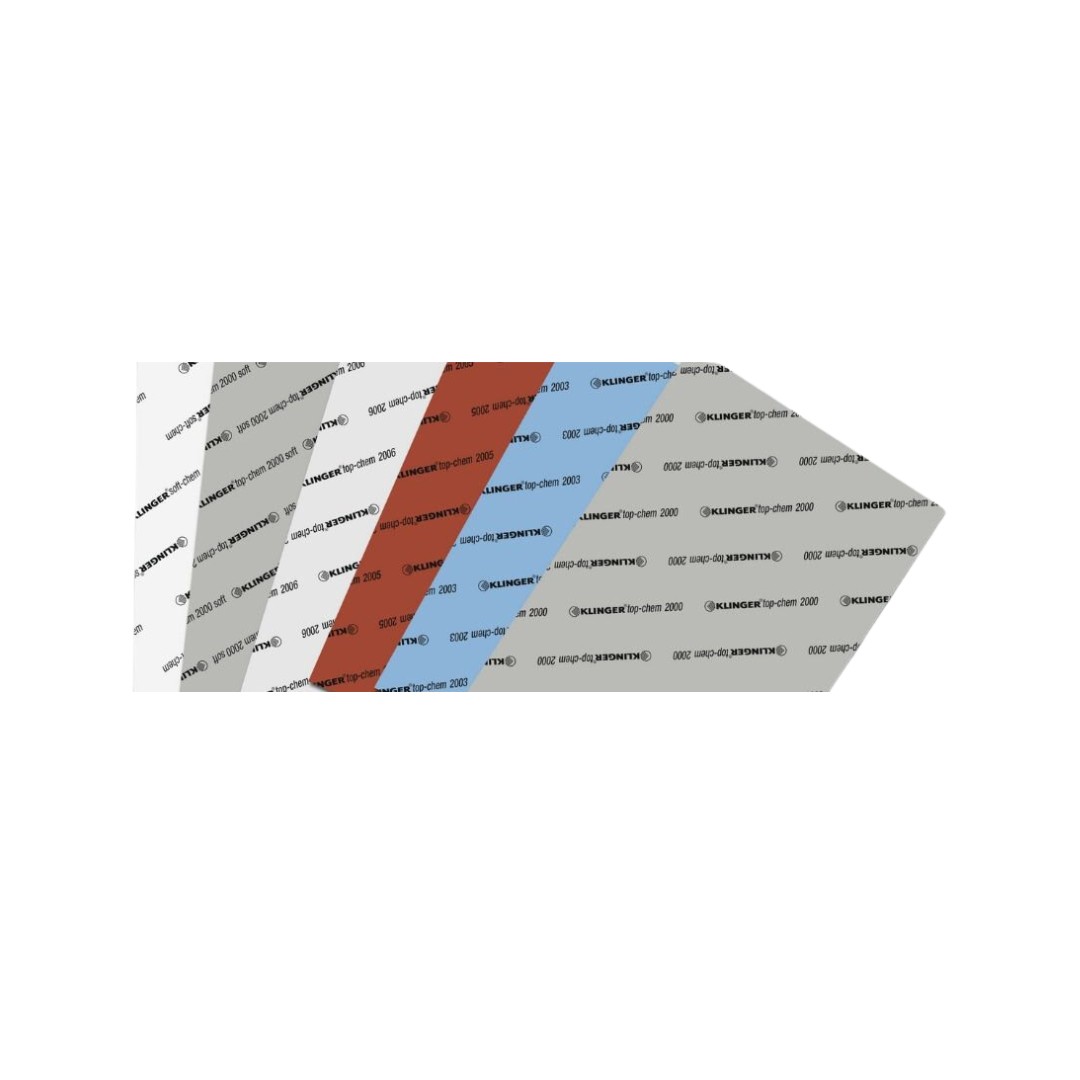
When maximum chemical resistance is required, PTFE flange gaskets are often the most reliable choice.
PTFE (polytetrafluoroethylene), also commonly known as a Teflon seal, is virtually chemically inert and resistant to an exceptionally wide range of aggressive media, from strong acids to corrosive alkalis, within a pH range of 0 to 14. As a result, PTFE seals are particularly suitable for critical flange connections in the chemical industry, petrochemistry, pharmaceutical production, food industry, water treatment, and energy sector.
At KLINGER Belgium, we combine material knowledge with in-depth expertise in assembly, emission control, and fire-safe performance. We don’t just deliver a seal, but a technically sound sealing solution tailored to your installation.
Our offering includes:
- Virgin PTFE flange gaskets
- Filled PTFE materials
- Expanded PTFE flange gaskets
- PTFE enveloped flange gaskets
PITA® DNA™
PTFE/Stainless steel seal | Steellined
PTFE tape
PTFE sealing tape | KLINGER Sealex
PTFE seal | PTFE
KLINGER top-chem 2006
KLINGER®top-chem-2005
KLINGER®top-chem-2003
KLINGER top-chem 2000 soft
KLINGER top-chem 2000
KLINGER soft-chem
GORE® Gasket Tape | Series 500
GORE® Gasket Tape | Series 1000
GORE® GR Sheet | GR Sheet Gasketing
GORE® Universal Pipe Gasket | Style 800
KLINGER envelopes type PFx
Why PTFE flange gaskets are the right choice
Do you work with aggressive acids or strongly basic media? Then the right PTFE seal is essential for a safe and durable seal. Thanks to its exceptional chemical resistance, PTFE withstands a broad chemical spectrum within pH 0 to 14.
- excellent chemical resistance
- resistant to strong acids, bases, and solvents
- widely applicable within pH 0 to 14
- hydrophobic, does not absorb moisture
- excellent electrical insulation
- available with food-grade certification, both FDA and EC1935-2004
- durable under heavy chemical load
This makes PTFE seals among the most versatile sealing materials for corrosive and aggressive process media.
However, not every application requires the same solution. Pressure, temperature, medium concentration, flange design, and assembly load determine which PTFE material is the best choice.
Our range of PTFE flange gaskets
1. Virgin PTFE flange gaskets
Virgin PTFE is the purest form of PTFE, without added fillers. This material offers maximum chemical inertness and is particularly suitable for applications where chemical compatibility and product purity are central.
Applications:
- chemical plants
- storage of aggressive chemicals
- piping systems with aggressive media
- process plants with high purity requirements
- pharmaceutical installations
- food production
Under high mechanical load, standard PTFE can be sensitive to cold flow. In such applications, filled PTFE materials often provide a better solution.
2. PTFE-filled seals, the power of KLINGER top-chem
Where standard PTFE reaches its mechanical limits, the added value of KLINGER top-chem begins.
These high-performance filled PTFE materials combine the exceptional chemical resistance of PTFE with significantly improved mechanical properties. Specific fillers, such as hollow glass microspheres, barium sulfate, silica, or silicon carbide, create a material that performs considerably better under load.
Advantages:
- Higher pressure resistance
- less cold flow
- higher dimensional stability
- Better torque retention
For installations where both chemical resistance and mechanical reliability are essential, filled PTFE materials are often the technically best choice.
3. KLINGER top-chem 2000, an exceptional combination of PTFE chemical resistance and fire-safe certification
Within the KLINGER top-chem range, top-chem 2000 occupies a unique position.
This high-quality filled PTFE material combines:
- excellent chemical resistance
- high mechanical strength, even at high temperatures
- low emission values
- fire-safe certification
This makes KLINGER top-chem 2000 particularly suitable for critical applications where chemical compatibility, emission control, and fire safety converge.
4. Expanded PTFE flange gaskets
KLINGER soft-chem combines the chemical resistance of standard PTFE with a softer, fibrous structure. This allows the material to adapt excellently to flange irregularities and deliver reliable sealing performance at lower bolt loads.
Advantages:
- highly compressible
- excellent adaptation to irregular flange surfaces
- good torque retention
- high sealing reliability
This makes expanded PTFE, such as KLINGER soft-chem and GORE® Universal Pipe Gaskets, particularly suitable for sensitive or less-than-ideal flange connections.
Expanded PTFE is available as sheet material, pre-cut flange gaskets, and sealing tape, providing a suitable solution for virtually any flange configuration.
5. PTFE enveloped flange gaskets
PTFE envelope gaskets combine the best of both worlds: the exceptional chemical resistance of PTFE with the mechanical stability of an internal carrier material.
These gaskets consist of a stable core, usually made of fiber material, graphite, or another suitable insert material, fully or partially enveloped by a high-quality, non-porous PTFE jacket. As a result, the medium only comes into contact with PTFE, while the core provides additional mechanical support and better compression properties.
This design makes PTFE envelope gaskets particularly interesting in applications where standard PTFE falls short mechanically, but maximum chemical resistance remains required. Furthermore, this construction offers higher resistance to stress relaxation than solid PTFE, resulting in more stable bolt loading over time.
Advantages:
- excellent chemical resistance
- increased mechanical stability
- better resistance to cold flow and relaxation
- reliable sealing during fluctuating pressure and temperature cycles
- anti-adhesive surface, limits product buildup
- economically attractive alternative to solid PTFE seals
Typical applications
PTFE enveloped flange gaskets are often used in:
- chemical process plants
- enameled reactors
- lined piping systems
- Glass installations
- plastic flanges and GRP systems
- pharma and food industry
When chemical compatibility is crucial but additional mechanical support is needed, PTFE envelope gaskets provide a highly sophisticated solution.
Suitable for critical sectors
KLINGER PTFE flange gaskets are used in environments where safety, chemical resistance, and process reliability are essential. Thanks to their virtual chemical inertness, broad pH resistance, and suitability for high purity requirements, they form a reliable solution in diverse industrial sectors.
- Chemicals: resistant to aggressive acids, bases, and solvents in demanding process plants.
- Oil & gas: reliable sealing under high pressure, temperature fluctuations, and corrosive media.
- Pharmaceuticals: suitable for applications where purity and contamination prevention are essential.
- Food industry: supports safe production processes with high hygiene and cleaning requirements.
- Water treatment: durable sealing solutions for variable chemical and thermal conditions.
- Energy: stable performance in plants with pressure and temperature fluctuations.
Certified sealing solutions for regulated applications
For applications where safety, emission control, and regulations are decisive, KLINGER Belgium offers PTFE flange gaskets with relevant certifications, including:
- EU 1935/2004: suitable for food contact
- TA-Luft: emission control according to German air quality standards
- BAM certification: suitable for oxygen applications
- DIN-DVGW W270: suitable for drinking water
- Fire-safe approval (KLINGER top-chem 2000)
This ensures you have a sealing solution that is not only technically high-performing but also compliant with current legislation and sector-specific requirements.
Need advice on the right PTFE flange gasket?
Not every PTFE seal is suitable for every application. The right material choice depends on the medium, concentration, temperature, pressure, flange quality, bolt load, emission requirements, and certification needs.
From standard PTFE to high-performance filled PTFE materials, KLINGER Belgium helps you select the right flange gasket for every chemically critical application.
Unsure about the right selection? Our specialists are happy to think along with you. Contact us for an appointment with our engineers.
Frequently asked questions about PTFE flange gaskets
1. What is a PTFE flange gasket?
A PTFE seal, often also called a PTFE gasket or PTFE packing, is manufactured from polytetrafluoroethylene (PTFE), a high-quality plastic material known for its exceptional chemical resistance. PTFE is virtually chemically inert, resistant to a very broad pH range (0–14), and is therefore widely used in chemical, pharmaceutical, and food processes.
PTFE seals are primarily used in static applications, such as flange connections in piping systems, heat exchangers, reactors, and process equipment.
2. What is cold flow in PTFE?
Cold flow (creep) means that the material slowly deforms under prolonged mechanical load. With standard PTFE, this can occur at higher pressure or temperature. In such applications, we recommend filled or expanded variants to increase mechanical stability.
3. What are the disadvantages of PTFE seals?
While PTFE offers many advantages, there are some points of attention:
- sensitive to cold flow under high mechanical load
- lower mechanical strength than some fiber or graphite materials
- relatively low thermal conductivity
- not ideal for highly dynamic applications
Therefore, it is important to consider pressure, temperature, flange design, and assembly load in addition to chemical compatibility when choosing a material.
4. What is the difference between PTFE and filled PTFE?
Filled PTFE is PTFE to which specific fillers are added to improve the mechanical properties of the material, while the excellent chemical resistance is largely maintained.
Where standard PTFE can be sensitive to cold flow (creep) under higher loads, filled PTFE materials offer higher mechanical stability, better torque retention, and a longer service life in critical applications.
Within the KLINGER top-chem range, KLINGER uses the following fillers, among others:
- Hollow glass microspheres (KLINGER top-chem 2003)
Improve compressibility and ensure excellent sealing, even at low surface pressure. - Silicon carbide (SiC) (KLINGER top-chem 2000 and 2000 soft)
Provides exceptional mechanical stability, very high pressure resistance, and minimal cold flow, even at elevated temperatures. This technology forms the basis of KLINGER top-chem 2000, globally unique with fire-safe certification for a PTFE material. - Barium sulfate (KLINGER top-chem 2006)
Offers a good combination of chemical resistance and mechanical performance, especially in strongly alkaline applications. - Specific inorganic fillers (KLINGER top-chem 2005)
Are used to specifically tune performance to certain chemical environments, such as strongly acidic applications.
Through this targeted material engineering, filled PTFE delivers clearly better performance than standard PTFE in applications with high pressure, thermal cycles, or prolonged mechanical load.
Need advice on PTFE seals?
Looking for a PTFE seal, PTFE gasket or high-performance Teflon seal for chemical applications? Our specialists are happy to help you with the right material choice, tailored to your installation.
Contact us for specific technical advice or a custom quote.