
Leak Protection / Spray Shields
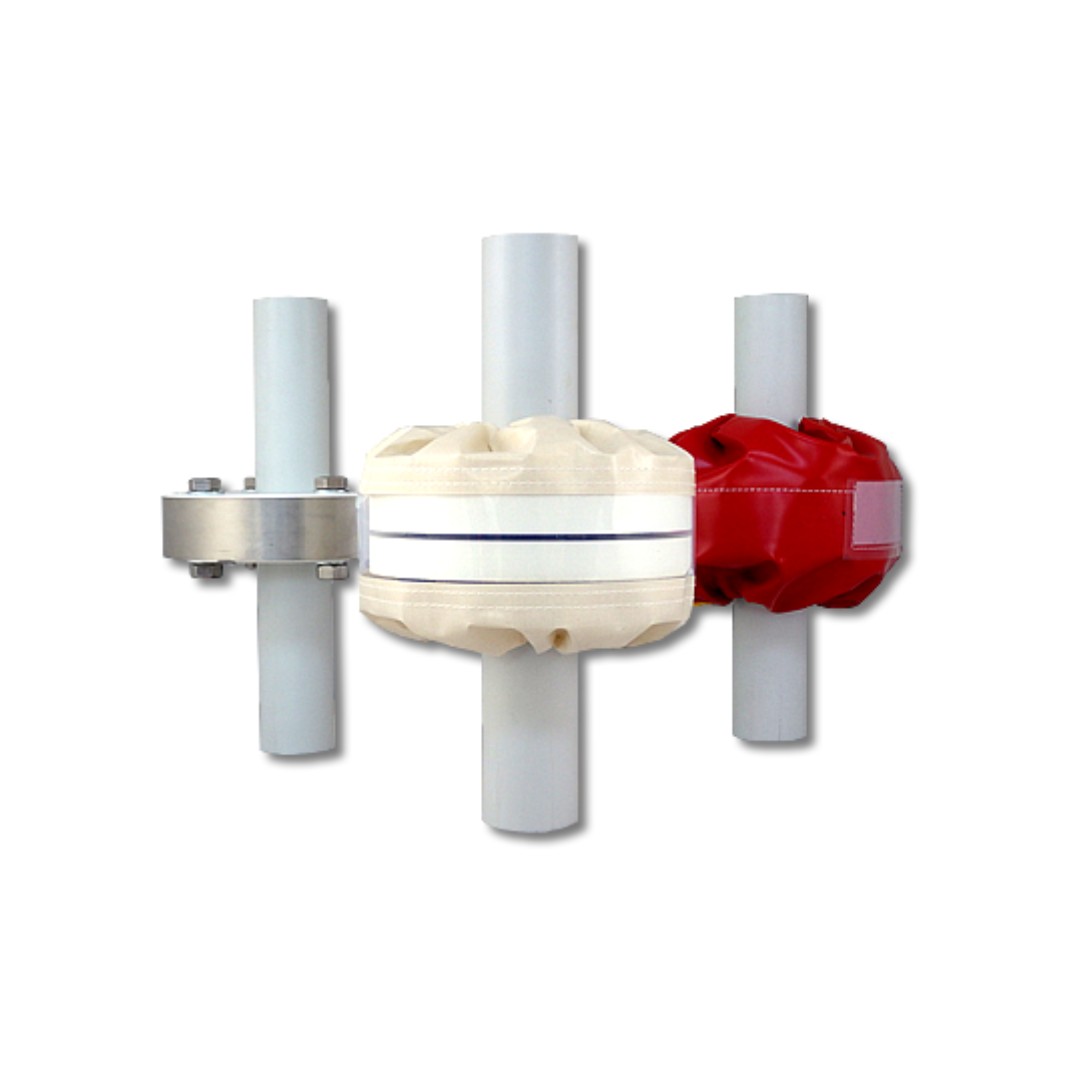
Critical connections pose a potential risk in every industrial installation. Not only flange connections, but also valves, expansion joints, pumps, and other components can lead to dangerous situations in the event of a leak.
Especially when working with aggressive chemicals, steam, thermal oil, or other media under pressure, even a limited leak can have major consequences for safety, the environment, and business continuity.
With KLINGER leak protection solutions (also known as spray shields or flange guards), you limit the impact of leaks and increase the safety of your installation and personnel. These leak protections provide a simple but effective solution to capture, deflect, and make unwanted leakage flows visible in a controlled manner.
What is leak protection or a spray shield?
A flange guard or spray shield is a protective cover placed around critical connections and components. In the event of a leak under pressure, it prevents liquids or media from spraying out uncontrollably.
Specifically, leak protection provides:
- deflection of dangerous leak jets (spray-out protection)
- protection of personnel against chemical or thermal risks
- detection of leaks via leak indicators or windows
- limitation of environmental damage
- controlled collection or drainage of leaking media
- reduction of fire hazard
Why choose KLINGER leak protection?
With the increasing focus on safety, emission reduction, and process reliability, preventing leaks at critical connections has become an important focus for the industry. KLINGER supports companies not only with the right spray shields or protection solutions, but also with advice on gasket selection, correct installation, inspection, and risk assessment. In this way, we help not only to limit the impact of leaks but also to prevent leaks proactively.
Personal protection
Leaks under pressure can lead to dangerous “sprayers” of chemicals, steam, or hot oils. This poses a real risk to employees located near the installation. With leak protection, the leak flow is shielded and deflected in a controlled manner. This avoids direct exposure and increases safety in the workplace without major adjustments to your installation.
Leakage detection
Not every leak is immediately visible. Small leaks often go unnoticed, leading to larger problems in the long term. Our spray shields can be equipped with leak detection or a window. This makes starting leaks quickly visible, allowing you to intervene in time. This prevents unplanned downtime and limits damage to installations.
Sustainability and environment
In many sectors, limiting emissions and leak losses is a major challenge. Uncontrolled leaks can cause harmful substances to enter the soil or environment. Leak protections help to limit these risks by capturing and managing leak flows. In this way, you contribute to a safer and more environmentally conscious operation.
Controlled drainage
When a leak does occur, control is crucial. Instead of uncontrolled spread, spray shields ensure that liquids are collected or drained in a targeted manner. Depending on the design (for example, with a drain connection), hazardous or aggressive media can be safely discharged. This makes maintenance and intervention not only safer but also more efficient.
Types of spray shields / leak protections
Depending on your application, medium, and process conditions, various shield designs are possible. Each solution is tailored to chemical compatibility, temperature, pressure, geometry, and the risk profile of the application.
KLINGER Spray Shield designs:
1. Spray shields for flange connections
The most common form of leak protection is the spray shield for flange connections. These protective covers are placed around the connection and prevent liquids or media from spraying out uncontrollably in the event of a leak under pressure.
Typical applications:
- chemical plants
- steam systems
- thermal oil
- water treatment
- utilities
- critical process piping
Possible options:
- transparent inspection window
- leak detection patch
- drain connection for controlled discharge
2. Valve shields for valves
Valves also form a potential leak point, for example at bonnet connections, packings, or connection flanges.
Valve shields are custom-designed around the geometry of the valve and offer the same protection against spray-out, but in a design adapted to valves and fittings.
Suitable for:
- manual valves
- control valves
- safety valves
- fittings with increased leak risk
3. Metal spray shields
For applications with high pressure, high temperature, or heavy mechanical load, a metal spray shield offers maximum protection.
Properties:
- available in stainless steel 304 or 316
- high mechanical strength
- suitable for extreme process conditions
- optional with drain connection
- optional with spacers to avoid direct contact with hot surfaces
Typical applications:
- steam
- thermal oil
- hydraulic oil
- gaseous media
- heavy industrial processes
Materials for spray shields
1. FG-PTFE (industrial standard)
The most commonly used textile design within industrial processes.
Properties:
- PTFE-impregnated fiberglass
- high chemical resistance
- high mechanical strength
- double stitched seams for extra strength
- PTFE-impregnated cords and stitching
- ETFE inspection window possible
- temperature range: -200 °C to +250 °C
Widely applicable for:
- acids
- bases
- solvents
- glycol
- ammonia
- various chemical media
2. PVC
An economical solution for less critical applications.
Properties:
- UV-resistant
- suitable for outdoor installation
- visual leak detection possible
- Easy installation
- cost-efficient
For:
- water
- light chemicals
- utilities
3. 100% PTFE
For very aggressive chemicals or maximum chemical resistance.
Properties:
- completely chemically inert
- non-porous
- suitable for highly corrosive media
- excellent resistance to almost all chemicals
- temperature range: -200 °C to +250 °C
Typical applications:
- HF
- strongly oxidizing media
- highly critical chemical processes
4. Metal (Stainless Steel)
For heavy process conditions where textile is not sufficient.
Suitable for:
- high pressures
- high temperatures
- steam
- thermal oil
- gas
- mechanically demanding environments
When is leak protection necessary?
Not every connection poses the same risk. However, there are situations where spray shields are strongly recommended:
- installations with high pressure or temperature
- chemical processes with aggressive media
- steam systems
- thermal or hydraulic oil
- environments with increased safety or environmental requirements
- difficult to access or critical zones