
Metallic seals
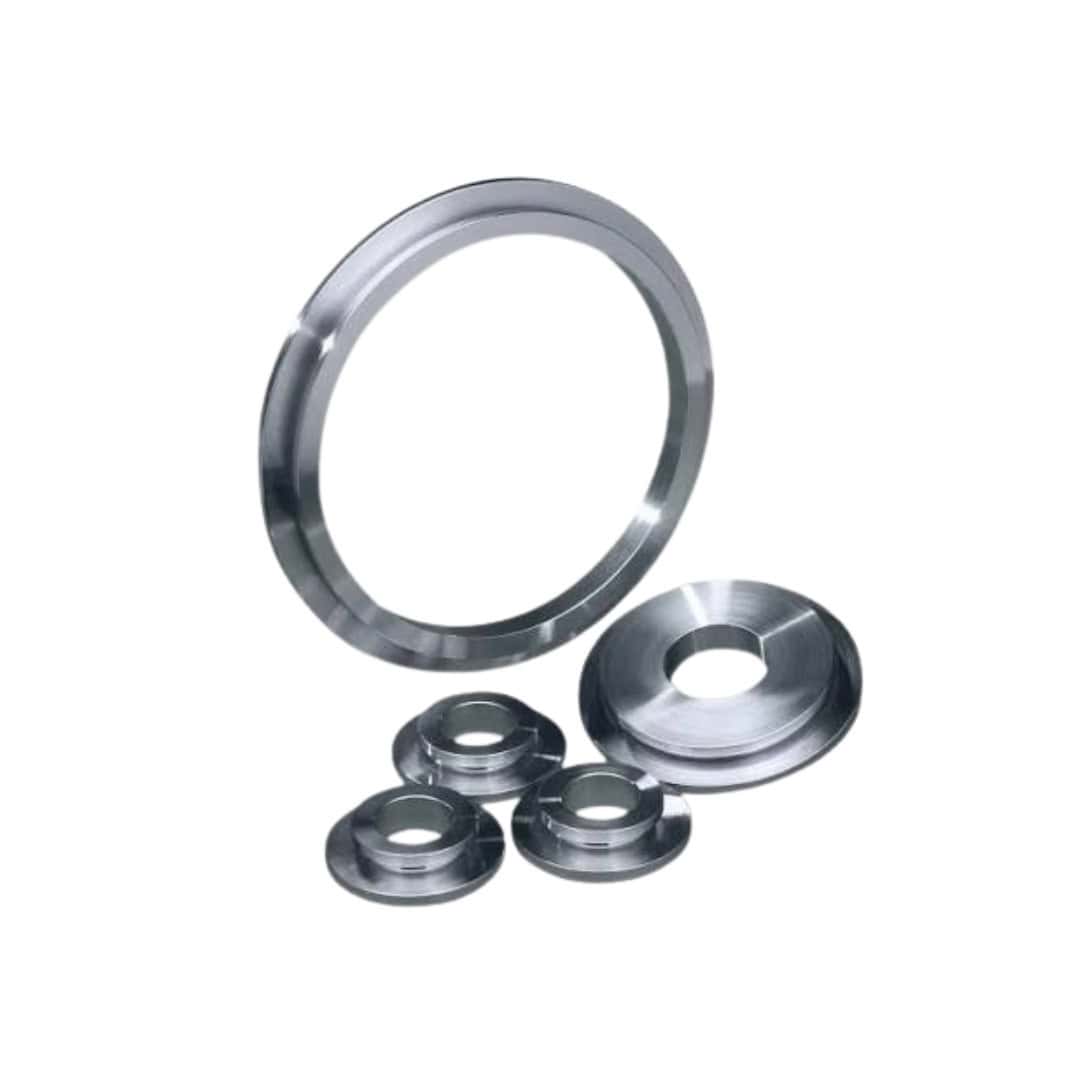
Metallic seals are applied where conventional sealing technologies reach their limits. In cases of extreme pressure, high temperatures, aggressive media, or critical safety requirements, all-metal seals offer the highest mechanical reliability and exceptionally high sealing security. Thanks to their dimensional stability, high load-bearing capacity, and excellent resistance to thermal and mechanical cycles, metallic seals are the reference solution for the most demanding industrial applications.
As one of the leading manufacturers of metallic seals worldwide, KLINGER possesses the expertise, engineering capacity, and production capabilities to provide both standard solutions and fully customized designs for high-integrity sealing applications.
Lens rings
Ring type joints
Sentry seals
Spades
Longitudinal baffle seal
Why choose metallic seals?
Metallic seals are chosen when maximum reliability is required under extreme process conditions.
Key advantages:
- suitable for extremely high pressure and temperature
- exceptional gas-tightness in critical applications
- very high mechanical strength and dimensional stability
- resistant to heavy thermal and mechanical loads
- excellent resistance to thermal cycles
- resistant to heavy mechanical loads
- designed for a long service life under extreme conditions
- available in various high-grade alloys for corrosive or critical media
Types of metallic seals
1. RTJ rings (Ring Type Joint)
RTJ seals are solid metal rings used in combination with specially designed flanges. They are suitable for heavy mechanical loads and high pressure and are primarily used in offshore, petrochemical, and oil & gas installations. These seals seal by plastic deformation between the flange and the ring. This ensures an extremely reliable metal-to-metal seal under high contact pressure.
They are produced according to standards such as ASME B16.20 and are widely used in oil & gas, offshore, and petrochemicals:
Available versions:
- Type R (oval or octagonal)
- Type RX (for higher pressure classes)
- Type BX (for very high-pressure applications)
- IX seal rings for high-integrity sealing applications
2. Lens gaskets
Lens gaskets (lens rings) are solid metal sealing elements with a lens-shaped sealing surface, designed for use in special conical flanges. They seal via line contact under compression, which ensures a very reliable seal, even with fluctuations in pressure and temperature.
Thanks to this sealing principle, they offer high sealing security in critical connections. Depending on the application, lens gaskets can also be reusable.
3. Weld rings
Weld rings are all-metal seals that are welded to the flange connection. This creates an extremely reliable, permanent seal for applications where leak-free operation is absolutely crucial. They are used in installations where maintenance or disassembly is infrequent. This makes them particularly suitable for critical applications with increased safety requirements.
Custom engineered metallic seals
In addition to standard types, KLINGER also develops fully customized metallic seals for heat exchangers, reactors, hydrogen applications, vacuum processes, and other high-integrity sealing applications.
Material selection and compatibility
Metallic seals are available in various high-grade materials, tailored to the medium, temperature, and process conditions.
Commonly used materials include:
- stainless steel (316, 321, 347)
- F5
- Hastelloy (C276, B2, C4)
- Inconel and Incoloy
- Duplex and Super Duplex
- titanium and other special alloys
The choice of material is based on factors such as chemical compatibility and flange hardness. For contact-sealing metallic seals such as RTJs, a slightly softer alloy than the flange material is typically chosen, so that controlled plastic deformation occurs without damage to the sealing groove.
Suitable for extreme industrial applications
Metallic seals are used in sectors where extreme process conditions and maximum reliability are central. Thanks to their all-metal construction, they are suitable for applications with high pressure, temperature, and critical sealing requirements.
- Petrochemicals and refineries: for installations with very high pressure and temperature, where process safety and leak-tightness are essential.
- Oil & gas: for critical applications under heavy mechanical loads and aggressive media, where absolute leak-tightness is required.
- Energy: for high-pressure steam systems, turbines, and heating installations with heavy thermal loads.
- Offshore: for applications in corrosive environments with high pressure and heavy mechanical loads.
Frequently asked questions about metallic gaskets
1. When do you choose a metallic seal?
When temperature, pressure, or safety requirements exceed the limits of soft or semi-metallic gaskets.
2. What is the difference between semi-metallic and metallic seals?
Semi-metallic gaskets combine metal with a soft sealing material and offer a balance between flexibility and strength. Metallic seals consist entirely of metal and are used in the most demanding applications where maximum mechanical performance is required.
Need advice on metallic seals?
Are you working with extreme pressure, temperature, or critical media? Our specialists will help you select the right metallic seal, tailored to your installation and process conditions.
Contact us for targeted technical advice or a custom solution.