
From decarbonization to hydrogen: How industrial companies are meeting the challenges of the Green Deal with KLINGER as a partner.
Since its launch in 2019, the European Green Deal has grown into one of the European Union’s most important political projects.
The goal: to make Europe climate-neutral by 2050. However, the deal also aims to strengthen the competitiveness of European industry and support the transition to a sustainable economy. This transition is accompanied by ambitious goals, such as the decarbonization of the economy, the promotion of renewable energy, and the development of hydrogen technologies.
Contact person in the article:
Yusuf Avci, ESG Manager at KLINGER Group
What does “climate neutral” actually mean?
Climate neutrality means that human activities have no net impact on the climate. This can be achieved by stopping greenhouse gas emissions entirely or by fully offsetting them through negative emissions. This balance is essential to limit global warming and achieve the climate goals of the Paris Agreement.
How do we approach this in practice?
What are the biggest challenges for industrial companies on the road to a low-carbon future? This blog provides an overview of the European Green Deal, outlines the key challenges, and shows how KLINGER products and solutions can support businesses.
The European Green Deal in a nutshell
The Green Deal is the European roadmap toward climate neutrality by 2050. Key pillars:
- Climate targets: -55% greenhouse gas emissions by 2030 (compared to 1990) and full climate neutrality by 2050.
- Sustainable economy: increasing competitiveness with higher environmental and social standards.
- Industrial transformation: decarbonization through technology, subsidies, and modernization of production processes.
- Energy transition: increasing the share of renewable energy, creating a common EU energy market, and developing hydrogen technology.
- In addition, there are supplementary initiatives such as the Clean Industrial Deal. Legal measures (such as RED III), funds (ETS Innovation Fund, Hydrogen Bank), and infrastructure expansion form the basis. Close cooperation between research, innovation, and application is crucial.
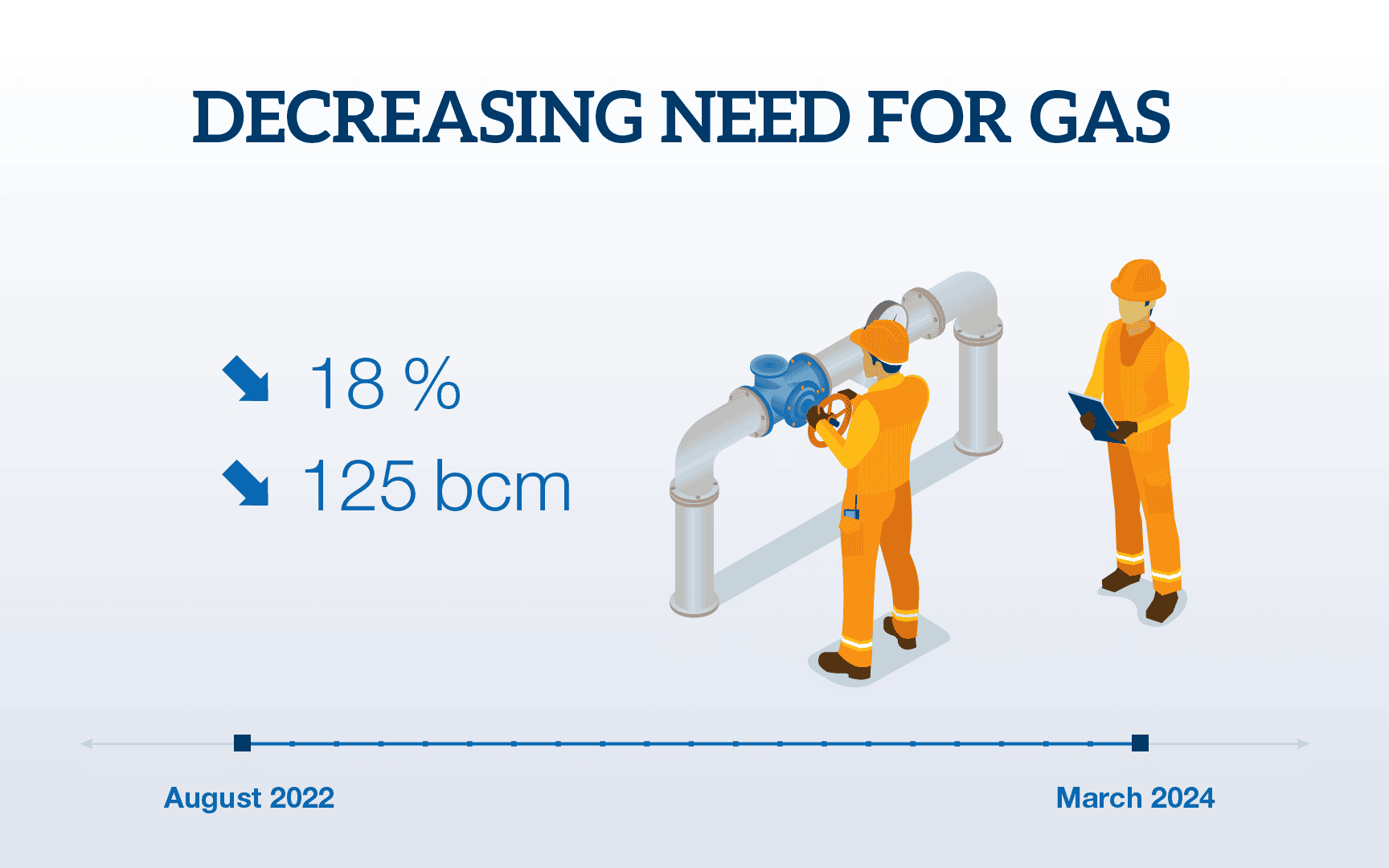
diversified energy supply. Result: a more stable and independent Europe.
Challenges for industrial companies
While the general public largely supports goals such as decarbonization and a circular economy, industrial companies often have to implement radical changes to realize these ambitions. The biggest challenges in doing so are:
- High energy costs
Rising energy prices put pressure on the competitiveness of companies. Investing in energy efficiency and in-house energy production can help, but requires significant resources. - Global competition
European companies are under heavy pressure from regions with less stringent environmental regulations. To remain competitive, Europe must lead the way in clean technologies. - Complex regulation
Numerous EU laws and directives, such as REPowerEU and RED III, and initiatives like the Net-Zero Industry Act (NZIA), impose ambitious targets that some companies can only meet with a collective organizational effort. - Transition to hydrogen
The EU sees hydrogen as a key technology for reducing emissions in sectors that are difficult to electrify. However, this requires extensive infrastructure, new technologies, and specialized expertise – including adapted gaskets and valves that meet high pressure and safety standards. - Regulatory uncertainty
Investors and customers demand predictability. However, fluctuating subsidy schemes and changing legislation make long-term planning difficult. - Infrastructure development
The electricity grid is not yet sufficiently equipped for the large-scale use of green hydrogen. This slows down rollout, increases costs, and often forces companies to develop their own solutions for transport and storage. - Cost and raw material pressure
International supply chains are under pressure, and the scaling up of renewable energy is often hindered by the scarcity of critical raw materials. This slows down production and drives up costs.
Net-Zero Industry Act
The Net-Zero Industry Act (NZIA), which builds on the Green Deal Industrial Plan, aims to significantly expand the production of clean technologies in the EU. Specifically, this legislation aims to stimulate technologies that support the transition to renewable energy and whose use leads to very low, zero, or even negative greenhouse gas emissions.
By 2030, at least 40% of the annual technological demand in Europe must be produced within the EU.
The project aims to attract investment, strengthen the competitiveness of European industry, create high-quality jobs, and contribute to the EU’s energy independence.
Solutions for a successful transition
KLINGER offers a wide range of products and services that support industrial companies in achieving their climate goals, with particular expertise in valves, gaskets, fluid control, steam, and filtration.
Gaskets for energy efficiency and lower emissions
Leakage losses are common in industrial processes. They not only cause additional costs but also release harmful emissions into the atmosphere. High-quality sealing systems from KLINGER help to limit these losses and thus make a direct contribution to the decarbonization of industry. Furthermore, they comply with strict safety and environmental standards.
KLINGER is once again setting new standards. This time with KLINGER Gaja, an exceptionally sustainable and resource-efficient gasket – proof of our consistent focus on sustainability. Thanks to its excellent ecological balance, this gasket helps companies achieve their own climate goals.
Want to know more? Go to gaskets.

KLINGER Gaja is the first sealing material for which all raw materials used in production have been consistently selected based on their sustainability. This resource-efficient material contains a particularly high proportion of renewable raw materials.
Valves for hydrogen applications
When replacing fossil fuels, hydrogen can become a key element in a climate-neutral industry. However, its transport and storage place high demands on pipelines, pressure vessels, and especially on valves. KLINGER has developed special products that operate safely and efficiently under these conditions, such as the KLINGER Ballostar KHSVI – the hydrogen ball valve, and other valves suitable for various pressure and temperature ranges.
Strict safety standards and compliance
Safety is crucial, especially in high-pressure systems and when handling flammable gases such as hydrogen. Because KLINGER products comply with all applicable standards (EN, ASME, ISO), they guarantee exceptional reliability.
Sustainability and longevity
The KLINGER Group attaches great importance to products that are not only technically high-performing but also contribute to sustainable solutions. Durable valves and gaskets limit resource use and promote the transition to a circular economy. We focus on:
- reducing operational costs over the entire life cycle
- limiting downtime thanks to reliable components
- simplifying maintenance and retrofitting
ESG as a solution?
ESG (Environmental, Social, Governance) is not a silver bullet for realizing the European Green Deal in itself, but it does make a valuable contribution. ESG practices support the transition in several ways:
- Reducing environmental impacts and promoting sustainability
- Assuming social responsibility as part of a just transition
- Stimulating transparency and responsible corporate governance
The KLINGER Group, which itself falls under ESG criteria, has been committed to sustainability for years. To reinforce this commitment, KLINGER has appointed an ESG manager who involves all departments and locations.
The focus here is on ESG reporting, in the form of a sustainability report that is part of the group’s management report.
“It is like a speedometer: how sustainable are we today, where do we want to be, how far can and must we go?” explains Yusuf Avci, ESG Manager at KLINGER Holding.

Outlook: On the road to climate neutrality in industry
The European Green Deal has the potential to steer industrial companies in Europe toward a sustainable future. Its success ultimately depends on close cooperation between policymakers, businesses, research, and society. The KLINGER Group supports this transition with products and solutions in the field of gaskets and valves. In this way, we not only help our customers achieve the ambitious goals of the European Green Deal but also strengthen their long-term competitiveness.
Conclusion
The decarbonization of industry, the integration of hydrogen into the energy mix, and the modernization of production processes are essential pillars of the European Green Deal. At the same time, they bring technical, financial, and organizational challenges. The KLINGER Group makes an important contribution to the realization of these goals, with tailor-made solutions that meet increasingly strict requirements in terms of safety, efficiency, and environmental friendliness. We show industrial companies in practical terms how they can successfully exploit the opportunities of the Green Deal.
Fact box
Did you know that…
- … the ‘Renewable Energy‘ Directive sets a general target of at least 42.5% renewable energy in the energy mix by 2030? This figure is binding at the EU level, with a target of 45%.
- … in 2022, for the first time, more electricity in the EU was generated from renewable sources than from gas?
- … 15% of the sealing materials used at KLINGER Dichtungstechnik are recycled? This is done by collecting offcuts from punched sheets, grinding them, and reprocessing the material into new gasket products.